Meta Accelerates AI Energy Strategy With One Gigawatt Solar Procurement Spree

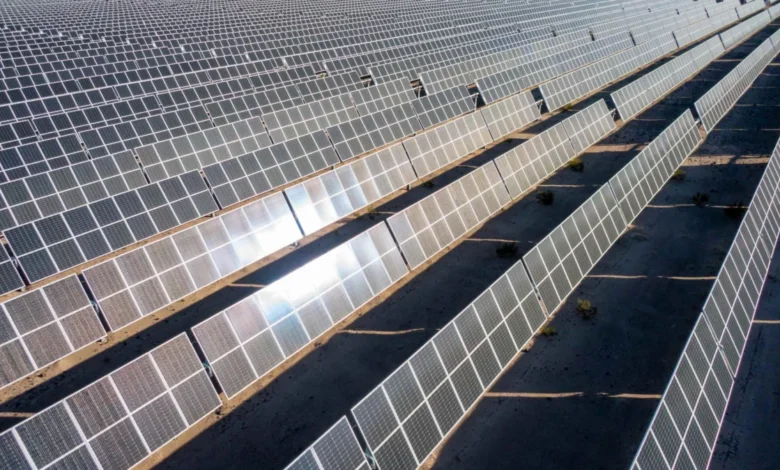
Meta has finalized a series of aggressive energy procurement agreements this week, securing nearly one gigawatt of new solar capacity as the social media giant maneuvers to meet the skyrocketing electricity demands of its artificial intelligence infrastructure. This latest move marks a significant milestone in the company’s broader strategy to power its expanding fleet of data centers with renewable energy, bringing its total solar acquisitions for the calendar year to over three gigawatts. As the tech industry grapples with the energy-intensive nature of large language models (LLMs) and generative AI, these deals highlight the growing reliance of Silicon Valley on large-scale solar projects, which are increasingly favored for their relatively quick deployment timelines and declining cost profiles.
The Anatomy of the New Deals
The most recent announcements detail three distinct agreements spread across the American South. On Monday, Meta confirmed the procurement of 600 megawatts of capacity from a utility-scale solar farm situated near Lubbock, Texas. While this facility is not hardwired directly into a specific Meta data center, the electricity will be fed into the regional grid, effectively offsetting the operational consumption of Meta’s data center clusters in the area.
This was followed yesterday by two additional agreements in Louisiana, totaling 385 megawatts of solar power. Unlike the Texas project, these deals are structured around the purchase of environmental attributes. By acquiring these certificates, Meta aims to balance its carbon-intensive energy intake with renewable output, a standard industry practice that has nonetheless come under increased scrutiny from climate researchers and policy analysts. All three of these projects are currently in the development phase, with commercial operations slated to commence in 2027.
The AI-Energy Nexus: A Growing Crisis
The rapid acceleration of Meta’s energy procurement is not a standalone phenomenon but a response to the "AI Gold Rush" that has fundamentally altered the power needs of the world’s largest tech companies. According to recent reports from the International Energy Agency (IEA), global electricity consumption from data centers could double by 2026. Training a single advanced AI model requires massive amounts of compute, which in turn necessitates constant, high-voltage power availability.
Data centers typically require "baseload" power—a constant supply that remains steady regardless of time or weather. Solar energy, which is inherently intermittent, poses a challenge to this requirement. However, companies like Meta are bridging this gap through grid-balancing strategies and the purchase of Renewable Energy Certificates (RECs). By funding the construction of massive solar farms, Meta and its peers are effectively subsidizing the decarbonization of the broader grid, arguing that if they push the total supply of clean energy higher, the net effect is a greener grid for everyone.
The Controversy Surrounding Carbon Accounting
The use of environmental attribute certificates (EACs) has become a point of contention within the climate science community. Critics argue that these certificates—often referred to as RECs—do not always represent "additionality." Additionality is the concept that a corporate investment actually causes a new renewable project to be built that otherwise would not have existed.
In the early days of renewable energy, when solar and wind were prohibitively expensive, the revenue generated from selling these certificates was often the deciding factor in whether a project received financing. Today, the economics have shifted. Solar and wind are frequently the cheapest sources of new power generation, often undercutting coal and natural gas even without subsidies. As a result, experts, including those who have studied corporate climate accounting, suggest that simply buying an existing certificate might be more of a marketing exercise than a transformative environmental action.
"If the goal is to truly offset the surge in AI-driven emissions," notes an environmental policy analyst familiar with tech sector procurement, "companies need to move beyond simple certificate purchases and engage in long-term power purchase agreements (PPAs) that incentivize the development of new, high-capacity, grid-integrated infrastructure."
Chronology of Meta’s Green Energy Shift
Meta’s journey toward renewable procurement has been a decade-long endeavor, but the intensity has spiked significantly since the 2022-2023 shift toward generative AI.
- 2013-2015: Initial pledges to reach 50% renewable energy for global operations.
- 2020: Meta achieves its goal of 100% renewable energy for global operations through a combination of PPAs and REC purchases.
- 2023: The integration of Llama and other AI models drives a projected 30-40% increase in energy demand for the company’s data center division.
- 2024: Meta shifts strategy to prioritize larger, gigawatt-scale solar procurements to stay ahead of the AI compute surge.
- 2025 (Q1): The current one-gigawatt deal signifies the largest single-quarter procurement effort to date.
Economic and Logistical Implications
The choice of Texas and Louisiana for these specific projects is strategic. Texas boasts the most robust renewable energy market in the United States, with a deregulated grid (ERCOT) that allows for rapid integration of new generation assets. Louisiana, meanwhile, represents a newer frontier for utility-scale solar. By planting roots in these states, Meta is insulating itself from the rising price of electricity in more congested markets like Northern Virginia or California, where grid capacity is increasingly strained by competition from other tech giants.
However, these projects are not without risks. The supply chain for solar panels, the availability of specialized labor to install them, and the bureaucratic hurdles of interconnecting new power plants to the grid all present significant bottlenecks. Even with a contract signed, the physical delivery of power in 2027 assumes that developers can navigate these logistical challenges without significant delay.
The Road Ahead: Beyond Solar
Industry analysts suggest that solar alone will not satisfy the voracious appetite of Meta’s AI ambitions. The limitations of solar—specifically its inability to generate power at night—mean that Meta will likely need to diversify its portfolio. This may lead to increased investment in battery energy storage systems (BESS), which can store excess solar power generated during the day for use at night.
Furthermore, there is growing interest among big tech firms in nuclear energy, specifically Small Modular Reactors (SMRs). While these technologies are currently in their infancy, the need for a 24/7, carbon-free, high-density power source is pushing tech firms to explore alternatives to traditional wind and solar.
Conclusion: Corporate Responsibility and Transparency
Meta’s latest procurement spree represents a necessary, albeit complex, step in the company’s effort to maintain its carbon-neutral status while scaling its AI capabilities. The sheer volume of the one-gigawatt purchase demonstrates that Meta is taking the energy cost of AI seriously. Yet, the persistent debate over the efficacy of carbon accounting remains a hurdle for public trust.
For the climate-conscious investor and the public, the question remains whether these mega-deals will lead to a cleaner energy grid or if they will merely serve as a shield against the criticism of an industry that is fundamentally changing the way humanity consumes power. As Meta continues to expand its infrastructure, the transparency of its accounting—and the tangible impact of its investments on the ground—will be the true metric of its environmental success. The company’s ability to balance the rapid iteration of AI with the slow, deliberate work of energy infrastructure development will define not only its own corporate legacy but the trajectory of the broader tech sector’s climate commitments for the next decade.
Related posts: